The Sound & Shore Folklore Register
Coastal Westchester oral tradition · vol. IV · maintained by volunteers since 1974
Record no. 14 — New Rochelle, N.Y.
The Watchman's Curse
On the blue lantern of Silas, the boy who warned him, and the girl who kept his glass.
- Record
- 14 — SSFR/NR/1726
- Classification
- Recurrent apparition, fixed centennial cycle
- Locus
- Wooded ground behind the Thomas Paine Cottage, Sicard Avenue; shoreline of Echo Bay
- First recorded
- 31 October 1726
- Interval
- 100 years, variance 0
- Recorded returns
- 1826, 1926
- Status
- Cycle open. Fourth appearance due.
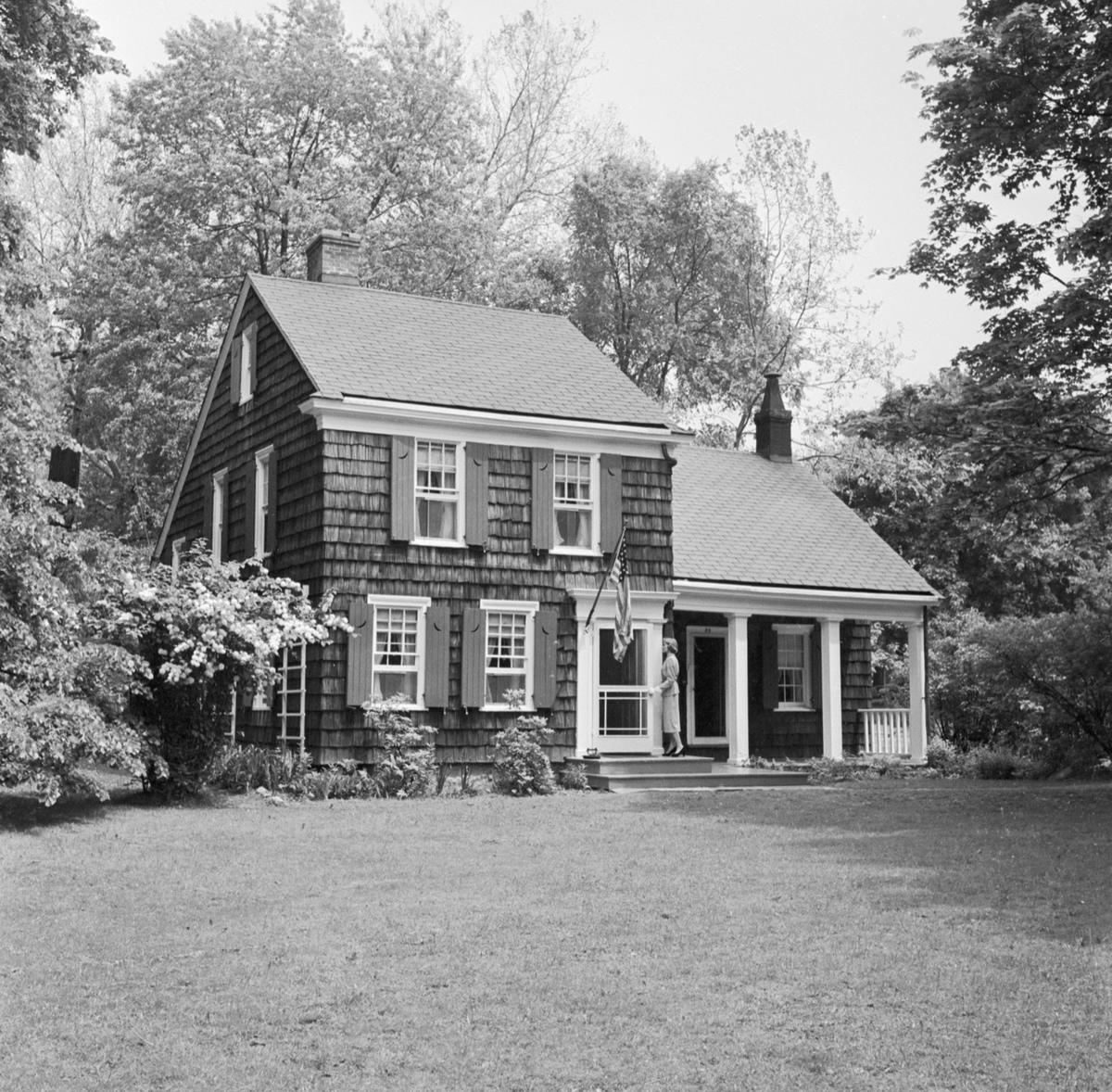
I — 1726The Watchman and the Boy
The account below is the oldest in the Register, transcribed from families of the original Huguenot settlement. It is the version most residents already know, and it is given here only so that what follows makes sense.
In 1726 the ground where the Thomas Paine Cottage now stands was not a neat grassy landmark. It was dense oak forest at the edge of a muddy colonial farming tract, threaded with dirt paths that a boy named Remy LeRoux knew better than anyone alive. Remy was ten years old and the fastest child in the settlement.
The village harvest was guarded by a towering, greedy watchman called Silas, who cared for the profit in the fields and nothing else in the world. Every night he walked the property by the light of a strange cobalt-blue lantern that threw long skeletal shadows up the trunks of the oaks.


On Halloween night a freak nor'easter came down on the settlement. The rain fell in freezing sheets and turned the paths into churning rivers of mud. The elders ordered everyone to high ground — but Remy saw the blue light still moving down in the woods. Silas was standing in the sludge, refusing to leave the harvest.
Remy ran through the stinging rain to the edge of the trees. "Silas! You have to leave!" The watchman only laughed, cold and cruel. "My harvest is worth more than my life, boy."
Then the earth gave way. A flash flood of black mud tore through the woods, and Remy scrambled up the stone foundation of the old house and onto the roof just in time. From the icy shingles he watched the mud take Silas down. The watchman never reached for a branch. He held the blue lantern tight until the ground closed over him.
In the morning the villagers found Remy shivering on the roof. Of Silas there was nothing at all — only the shattered glass of his lantern, resting perfectly on a tree stump. Remy LeRoux lived to be an old man and spent his whole life warning the children of New Rochelle: a heart that greedy never truly rests. Once every hundred years, Silas gathers enough strength to crawl out of the mud and collect the harvest he lost.
II — 1826The First Return
The Register's earliest interval record is the testimony of a blacksmith working late on the last night of October 1826. He described a blue light moving steadily between the trees with no lantern-bearer beneath it, and the smell of low tide strong in the air more than a mile inland. He barred his door and kept his back against it until the sun came up.
One hundred years, to the night. Remy's warning was recorded and set aside.
III — 1926The Sterling Incident
Exactly one hundred years after the blacksmith, a ten-year-old girl named Clara Sterling made a mistake that moved the curse off the shoreline and put it inside a house.
Clara's father was the caretaker of the cottage grounds, so Clara had the run of the property and the run of the bay. In October 1926, after a heavy rainstorm, she was skipping stones at Echo Bay when she saw something shimmering in the wet sand: a jagged piece of cobalt-blue glass, worn perfectly smooth on every edge but one.

Clara had never been told the legend. She did not know she was holding the largest missing shard of Silas's lantern. She thought it was treasure. She put it in her coat pocket and walked the whole way home up North Avenue, and that afternoon she hid it under a loose, creaky floorboard inside the old colonial house, to keep it safe.
As the sun went down on Halloween night, the fog coming off the Long Island Sound did not stay down by the water where fog belongs.
It came inland. It rolled up North Avenue and swallowed the streetlights one after another, and then it filled the woods around the cottage until the trees were gone. Clara woke to a sound she would describe the same way for the rest of her life: the heavy, squelching tread of soaking-wet boots being dragged across the grass, around and around the house.
The cold in her room dropped until frost formed on the inside of the window. Something enormous, streaming with seawater, put its face against the wavy eighteenth-century glass. The shard was pulling him like a magnet, and he had come for it — but Clara had hidden it well, and he could not find it before the sunrise forced him back down to the bay.
Clara Sterling never dared move that piece of glass. It is still under the floorboards of the Thomas Paine Cottage today.
IVCaretaker's Log — Entered in Evidence
The Register holds one contemporary document from the Sterling incident: a single page from her father's grounds log, written the morning after.
Floorboard by the east wall stood up two inches overnight, nails drawn out clean and laid beside it. Not by my hand, and not by the damp.
Grass outside pressed flat in a ring about forty paces around the house, and there is salt in it. We are a mile and a quarter from the water.
Refastened the board with four new nails and my own weight on it. Clara will not tell me what is under there, and I have stopped asking her.
— J. S., caretaker
VThe Interval
The Register tracks this record because the cycle has never once drifted.
| Year | Witness | Locus | Outcome |
|---|---|---|---|
| 1726 | Remy LeRoux, age 10 | Woods behind the cottage | Lantern lost; harvest lost |
| 1826 | Blacksmith, unnamed | Treeline, Sicard Ave. | Searched blind; found nothing |
| 1926 | Clara Sterling, age 10 | Inside the cottage | Came within one floorboard |
| 2026 | — | Expected: the cottage | Pending |
Do the math yourself. Seventeen twenty-six. Eighteen twenty-six. Nineteen twenty-six. Two thousand twenty-six. The century is up, and this Halloween is the three hundredth anniversary of the night Remy LeRoux first ran through the mud to shout a warning that nobody took seriously.
And there is one difference this time that the Register wishes to state plainly. In 1726 Silas lost his lantern. In 1826 he was searching blind. In 1926 he came within the thickness of a single pine board of getting it back.
He knows exactly where to look now.
Counting rhyme, collected from New Rochelle schoolchildren, c. 1931
Blue in the window, blue in the pane,
blue in the woods when it starts to rain.
One hundred under, one hundred down,
one hundred walking when he comes to town.
Silas, Silas, where's your light?
Sunk in the mud on a Hallows' night.
Don't you look and don't you speak —
leave him something. Let him seek.
Seventeen, eighteen, nineteen, and four:
count them out on Sicard Street.
Three hundred years beneath the floor,
and now the glass and the Watchman meet.
If You Are Out on the 31st
Guidance as given by Remy LeRoux and repeated in every transcript since.
- Stay on the sidewalk. Do not set foot on the grass around the cottage. The ring in the 1926 log was forty paces wide, and he does not like trespassers getting in his way.
- Watch the windows, but keep your eyes forward. If a faint blue glow is moving behind the old glass or drifting through the trees, you have already seen enough.
- Do not speak to it. Not one word — and do not answer it if it speaks to you first.
- If you hear wet boots behind you, set your heaviest piece of candy down in the dirt and keep walking. That is the offering. He is owed a harvest and he will take what is given.
- Do not run, and do not look back. Remy ran because he had a tree to reach. You have a front door.
- Be home before the fog gets up North Avenue. In 1926 it cleared the streetlights in under an hour.